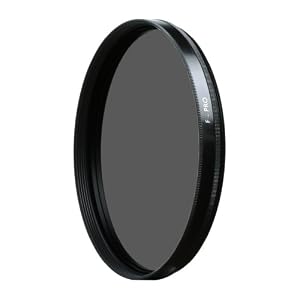
Are you looking for B+W 77mm XS-Pro Kaesemann Circular Polarizer with Multi-Resistant Nano Coating ? you comes at the right place because we provide some information about it. You can get special discount for B+W 77mm XS-Pro Kaesemann Circular Polarizer with Multi-Resistant Nano Coating.You can choose to buy a product and B+W 77mm XS-Pro Kaesemann Circular Polarizer with Multi-Resistant Nano Coating at the Best Price Online with Secure Transaction Here...

other Customer Rating:

$208.50
Read more details
Käsemann Circular Polarizers - The Greatest Quality Polarizer Available
The images around the left was taken without filter.
The image around the right was taken using a
B+W Circular Polarizer. Click for larger view.
The images about the left was taken with no filter.
The image on the right was taken using a
B+W Circular Polarizer. Click for larger view.
Circular polarizing filters are made for all cameras with beam splitters in the light paths of these TTL exposure meter and with autofocus lenses. Circular polarization has the same pictorial effect as linear polarization, but allows for proper exposure metering and/or autofocus distance settings.
Käsemann polarizing foils are neutral in color, use a higher efficiency than conventional polarizing foils, and are cemented between high-grade plano-parallel optical glass, using a special cementing technique that resists delamination in humid climates. The resulting sandwich is then precision-polished again to realize highly accurate plano-parallel surfaces. Discriminating photographers regard the B+W Käsemann Polarizer as the top polarizer about the market. They are very well fitted to applications that require the best possible imaging quality, especially with high-speed telephoto lenses and apochromatic lenses.
B+W Polarizers increase color saturation and reduce reflections. The filter factor varies as outlined by how a filter is positioned in relation to the sun. Exposure compensation is approximately two f-stops.
Why Use a Circular Polarizer?
Modern DSLR cameras use a beam-splitting prism that sends part of the incoming light for the meter and part for the viewfinder. The effect is always that the lighting entering the meter is partially polarized by the beam-splitter. A linear polarizer placed on the lens of this kind of system will act like a second polarizer and block light on the meter by a degree dependent around the angle between the prism as well as the polarizer around the lens. The end result is incorrect exposure/aperture values from the meter. This is exactly why you may need a circular polarizer basic cameras. The circular polarizer circumvents this issue with the help of of a 1/4-wave retarder, or delay foil. This ensures that this linearly polarized light is changed into a rotation that appears unpolarized towards the meter, causing proper exposure/aperture readings.
B+W's Superior MRC Coating with Nano Technology
Illustration of lotus impact on water
droplet caused by nano coating.
The nano coating is surely an surface of protection that comes standard with all of XS-Pro Digital MRC filters. The nanotechnology based characteristic (lotus effect) produces a much better beading effect with water, making the cleaning of the filter even simpler and faster than previously before. MRC nano comes with an improved outer (8th) layer over regular MRC.
The lens elements of high-quality lenses and the plano surfaces of filters require the perfect shape and smoothness to achieve the best optical quality. Dirt, greasy fingerprints, water marks and scratches reduce the image contrast as well as the sharpness, which may result in blooming at light sources and have an effect similar to a soft-focus lens. A clean front lens element and clean filter surfaces are therefore an absolute pre-requisite for demanding photographers.
The nano coating results in lotus influence on water droplet.
The MRC coating is first and foremost a broadband anti-reflection coating. This implies what has reflection-reducing effect, which is thus also a transmission-increasing effect, i.e. one which suppresses scattered light and ghost images and transmits more light, features a broadband action over the full spectrum. In contrast, the (almost always blue) single-layer coating only includes a high effect inside the medium wavelength range around yellow and yellow-green the place that the eye is most understanding of light, while its effect is greatly reduced toward the blue-violet and purple-red end regions with the visible spectrum. With the MRC coating, this blue, violet and red to deep-red light cannot produce any contrast reducing scattered light, spotty reflections or ghost images. A broadband effect are only able to be performed having a multilayer coating which needs a much higher effort and precision because unevenness and irregularities of the individual layers build through to one another and amplify one another. Schneider therefore runs on the plasma-assisted evaporation coating process through which inert gas ions accelerated in a electrical field compact the material deposited for the lens surface inside vacuum chamber.
For photographers, the primary advantage of MRC coating, is it's ability to combat flare and ghosting. An added benefit is the very fact that their filters remain clear of dirt longer, so that they actually do not need to become cleaned so often. When cleaning the filter does become necessary, it can be a lot better to wipe off of the dirt with a blower brush, due to MRC's power to repel dirt and moisture. This cuts down on the probability of micro-scratches which could occur during cleaning.
XS-Pro Digital Filter Mount
This filter uses our rotating XS-Pro Digital mount which can be especially suited to DSLRs with wide angle and zoom lenses. It has a front thread for additional accessories such as lens caps or hoods. All XS-Pro Digital mounts are made of brass and are matte black to stop reflections.
Circular polarizing filters are generated for all cameras with beam splitters in the light paths with their TTL exposure meter along with autofocus lenses. Circular polarization has a similar pictorial effect as linear polarization, but enables proper exposure metering and/or autofocus distance settings. The "high-end" polarizing foils in the Käsemann-type filters are neutral in color, they have a very higher efficiency than conventional polarizing foils plus they are cemented between high-grade plane-parallel optical glass. The resulting sandwich is then precision-polished again to attain highly accurate plane-parallel surfaces. Subsequently they're edge-sealed to protect the foil against humidity. Discriminating photographers regard the B+W Käsemann-Type Polarizing Filter to be the top of most polarizing filters. They are well suited for applications that require the highest possible imaging quality, particularly with high-speed telephoto lenses and apochromatic lenses.
This filter uses our XS-Pro Digital mount which is especially suited for DSLRs with wide angle and zoom lenses. It has a front thread for additional accessories. All XS-Pro Digital mounts are made of brass and are matte black to prevent reflections.
MRC nano has an improved outer (8th) layer over regular MRC. The nanotechnology based characteristic (lotus effect) produces a better beading effect with water making the cleaning of this filter even simpler and faster than ever before.
Manufactured from Water-White Schott Glass


0 comments:
Post a Comment